
The Indian government is actively promoting manufacturing in the rapidly expanding aerospace sector, with collaborations between Indian and foreign companies leading to the establishment of new facilities.

Even in the domestic aviation scene, consolidation talks are on among some private airlines.
A draft bill to set up a powerful Civil Aviation Authority for better regulation of the aviation sector is in an advanced stage of getting the official nod, official sources said on Thursday.
A proposal to hike foreign direct investment cap in helicopter and sea-plane operations, MRO facilities, charters, air-cargo and non-scheduled air operations has been moved by the civil aviation ministry for the Cabinet's consideration.

The Indian government is considering additional relief packages for vulnerable sectors like MSMEs to mitigate the impact of the ongoing West Asia crisis on the economy and inflation.
The civil aviation industry was poised to generate about 20 lakh (2 million) jobs in the next five years, Union Civil Aviation Minister Praful Patel said in Mumbai on Friday.

India's aviation sector is facing fresh turbulence, with rising fuel costs, the Ministry of Civil Aviation's free-seat directive, and geopolitical disruptions in West Asia clouding near-term earnings visibility.

Indian benchmark stock indices, Sensex and Nifty, recorded their fourth consecutive day of declines, driven by selling in FMCG, financial, and auto sectors. The downturn is attributed to fresh tensions in the Middle East, uncertainty surrounding the US-Iran 60-day ceasefire, and elevated crude oil prices.
The government will soon announce a major liberalisation in foreign direct investment policy, hiking the threshold limit in many of the ground handling and support services to 100 per cent.

Tata Sons Chairman N Chandrasekaran on Saturday said Air India, which is undergoing a transformation, is not just a business opportunity but a "responsibility" for the Tata Group.

India's consumption stocks, which have outperformed the broader market, are now facing significant pressure due to a gradual rise in fuel prices and the potential for higher inflation. Analysts warn that companies may be forced to pass on increased input costs to consumers, potentially hurting demand across both staples and discretionary categories, with a looming threat of deficient monsoon rainfall further exacerbating inflationary concerns.

A section of industry may need to begin compliance immediately, even as most states are yet to notify their rules.

Ahmedabad police have arrested a man for allegedly sending bomb threat emails to GUJSAIL at Ahmedabad Airport and schools in March. The accused, Bhavesh Patel, was traced through an account allegedly operated by him.
The downturn in the aviation sector is expected to continue till at least the end of this year as record oil prices compel airlines to raise fares, according to International Air Transport Association (IATA) and Centre for Asia Pacific Aviation (CAPA).

Indian airports are rapidly becoming a significant growth avenue for the country's retail sector, with brands across various consumer segments actively opening stores to tap into the increasing number of flyers and strong domestic tourism momentum.

No major relief for airlines from the Budget.

AI reduces the time taken to find a target and launch a strike. This has led to a major increase in the pace of the conflict, with one report mentioning nearly 900 strikes launched on Iranian targets in the first 12 hours of an operation.
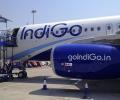
InterGlobe Aviation (IndiGo) is experiencing significant financial pressure, with its stock falling 18 per cent since the start of the Iran war, due to rising Brent crude prices, a weakening rupee, and disruptions to its West Asia and European flight networks caused by geopolitical tensions.

Noida International Airport is set for its grand opening as roads are fixed and infrastructure preparations near completion. Here's what's ready and what to expect from the launch.

Indian equity benchmarks Sensex and Nifty surged nearly 1 per cent, driven by strong earnings reports from FMCG and auto sectors, alongside a rally in Asian markets and signs of de-escalation in geopolitical tensions.

The Indian banking sector is projected to experience a steady 9-13 per cent industrial credit growth in the first half of 2026, driven by capital expenditure, infrastructure development, and sectoral demand recovery, according to a Ficci-IBA survey.

Indian benchmark indices Sensex and Nifty experienced declines due to a sharp rally in crude oil prices, continuous foreign fund outflows, and geopolitical uncertainties. Regulatory developments in the banking sector, particularly the implementation of the Expected Credit Loss (ECL) framework, also contributed to the selling pressure.

The sector requires proper implementation of policies, coupled with reasonable taxes and improved basic infrastructure.
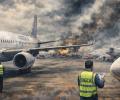
Events from mid-2025 to early 2026 exposed deeper systemic concerns for India's aviation safety architecture.

S&P Global Ratings warns that a sustained rise in crude oil prices to $130 per barrel could significantly slow India's economic growth, weaken fiscal metrics, and strain corporate and banking sector performance, potentially reducing growth by up to 80 basis points.
The civil aviation sector will attract an investment worth Rs 1,00,000 crore (Rs 1000 billion) in the next four years for development, modernisation and aircraft acquisition, according to Union Civil Aviation Minister Praful Patel.

Indian markets on Dalal Street rallied sharply as easing tensions in the US-Iran conflict and stable oil prices boosted sentiment. Track Nifty50 and BSE Sensex performance and key global triggers.

Indian benchmark stock indices, Sensex and Nifty, surged over 1 per cent, driven by optimism surrounding potential US-Iran peace talks and a significant drop in crude oil prices below the USD 100 per barrel mark. This de-escalation in geopolitical concerns and easing inflation pressures provided a substantial boost to investor sentiment.

The year gone by has also forced all airlines to turn the lens sharply on their own costs, workings and internal dynamics, opening their eyes to their vulnerabilities. Fewer, leaner, nimbler players will emerge from the carnage.
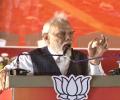
West Bengal Chief Minister Mamata Banerjee has accused the BJP-led central government of using the proposed amendment to the women's quota law as a front for the Delimitation Bill, which she claims will divide the country. She asserted that her party will fight this move at every step.

An Akasa Air and a SpiceJet plane collided on the taxiway at Delhi airport, resulting in both aircraft being grounded due to damage. The incident occurred at Terminal 1, with investigations underway.

Indian stock market benchmarks Sensex and Nifty closed higher on Tuesday, buoyed by a drop in crude oil prices, a rally in global markets, and strong buying in IT stocks.

Brokerage Bernstein has warned Prime Minister Narendra Modi that India risks squandering recent economic gains unless it accelerates structural reforms, particularly in jobs, manufacturing and innovation.
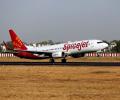
SpiceJet recorded the highest complaint rate per 10,000 passengers, rising sharply from 3.9 in November 2024 to 13.8 in October 2025.
Indian equity benchmark indices Sensex and Nifty surged significantly in early trade, mirroring a global market rally and a drop in crude oil prices below USD 100 per barrel, driven by renewed hopes of diplomatic engagement between the US and Iran.
The government has suspended its directive requiring airlines to offer at least 60% of seats on flights without additional charges, following industry concerns about the impact on fares and pricing structures.

Nath's comments came amid the Congress party's continuous attack on Centre for the recent hike in commercial LPG cylinders and the Aviation Turbine Fuel (ATF).
Indian benchmark stock indices, Sensex and Nifty, closed nearly 1 per cent lower following the collapse of US-Iran negotiations, which heightened concerns of a prolonged conflict in West Asia and drove crude oil prices sharply higher.

Indian carriers are expected to double their fleet size by 2020 to 1,000 aircraft by 2020, promising a huge opportunity for the maintenance, repair and overhaul business.

'The CCI will first need to take a prima facie view on whether IndiGo's role warrants a detailed investigation.'
